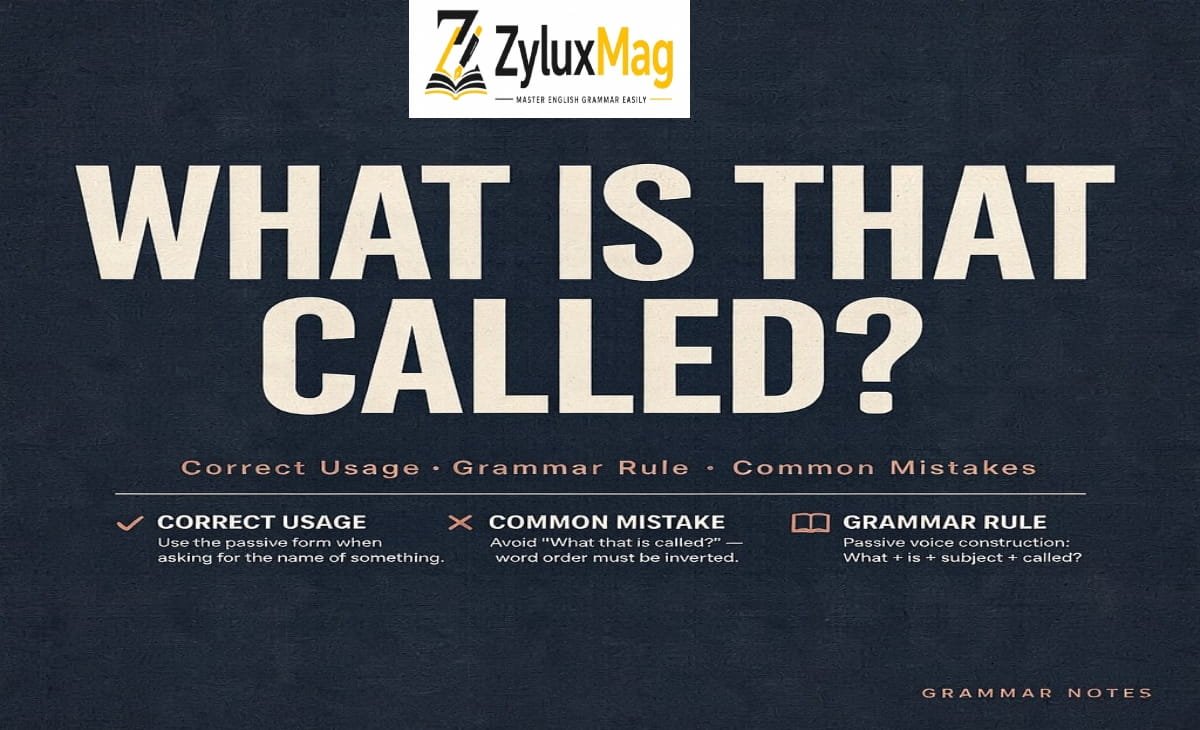
Yes — What is that called? is correct. It’s the standard way to ask for the name of something in English. The key rule: use “what,” not “how,” because you’re asking about identity (a name), not manner (a method). “How is that called?” is a common mistake, not an accepted alternative.
That one rule solves most of the confusion around this phrase. The rest comes down to small details — which pronoun to use, how to answer, and when to use a more casual version instead. Here’s all of it.
A Mistake I Actually Made
I still cringe thinking about this one. Early in my freelance writing days, I sent a client a message asking, “How is that thing called in your industry?” about some tool I didn’t know the name of. She replied — politely, but clearly amused — “I think you mean what is it called!” I remember staring at my screen, mortified, because I’d been writing professionally for months and never once questioned that phrase. Turns out I’d been saying it that way my whole life without realizing it was wrong. That tiny correction stuck with me harder than any grammar lesson ever had — which is exactly why I wanted to write this out properly, once and for all.
Why “What,” Not “How”
In English, “what” asks for information, identity, or a name. “how” asks about manner, method, or condition.
Naming something is a question of identity — so it needs “what”:
- ✅ What is that called?
- ❌ How is that called?
Compare that with a real “how” question, where manner is actually being asked about:
- ✅ How is that made? (asking about a process)
- ✅ How is that pronounced? (asking about a method)
If you’re mentally translating from another language, this is worth remembering: many languages do use a “how” equivalent to ask for a name (Italian “Come si chiama?”, French “Comment ça s’appelle?”, and similar patterns in other languages all use “how”). English doesn’t follow that pattern — it treats naming as a “what” question. That’s the reason this particular error shows up so often, and knowing the reason makes it easier to stop making it.
The Structure Behind “What Is That Called?”
The phrase is built from a passive sentence. Strip away the question, and the underlying statement looks like this:
That is called [a name].
Turning it into a question just moves the “wh-” word to the front:
What is that called?
This is why the verb “called” doesn’t change form and why “is” has to stay in the sentence — it’s doing the same job it does in any passive construction (is + past participle). That’s also why dropping it breaks the sentence:
- ❌ What that called?
- ✅ What is that called?
Without “is,” the sentence has no verb, and “what that called” isn’t a complete question.
“That” vs. “This” vs. “These” vs. “Those”
The demonstrative you choose depends on two things: distance and number.
| Near | Far | |
| Singular | What is this called? | What is that called? |
| Plural | What are these called? | What are those called? |
Two rules to keep in mind:
- This/that are singular and pair with is. These/those are plural and pair with are.
- This/these point to something close to you; that/those point to something farther away (or something already mentioned).
A frequent mistake is keeping “is” with a plural subject:
- ❌ What is those called?
- ✅ What are those called?
“What Is That Called?” vs. “What Do You Call That?”
Both questions are correct, and they ask for exactly the same information — they just use different sentence structures.
| Question | Structure | Feels |
| What is that called? | Passive (that is the subject) | Neutral, works in almost any situation |
| What do you call that? | Active (you is the subject) | Slightly more conversational and direct |
Neither one is more “correct” than the other. Use whichever fits the tone of the conversation — the passive version is a safe default for writing, instructions, or more formal contexts, while the active version reads a little more like natural spoken English what happen or what happened.
“It’s Called” vs. “Its Called” vs. “It Called”
This trio trips people up when they’re answering the question rather than asking it.
- ✅ It’s called a thermos. (“It’s” = “it is” — this is correct.)
- ❌ Its called a thermos. (“Its” is a possessive pronoun, like “its color” or “its size.” It never pairs with “called” on its own.)
- ❌ It called a thermos. (Missing “is” — incomplete, same problem as “what that called.”)
Quick check: if you can expand “it’s” to “it is” and the sentence still makes sense, the apostrophe is correct.
Quick Reference
| Say This | Not This | Why |
| What is that called? | How is that called? | “What” asks for identity, not manner |
| What do you call that? | How do you call that? | Same rule applies to the active version |
| What are those called? | What is those called? | Plural subject needs “are” |
| What was that called? | What is that called (for a past event) | Past reference needs “was” |
| It’s called a… | Its called a… | “It’s” = it is; “its” is possessive |
Common Mistakes to Avoid
- “How is that called?” — the most frequent error, usually from translating another language directly. English uses “what” for names and identities.
- Dropping “is.” — “What that called?” is missing its verb and isn’t a complete question.
- Mixing up “it’s” and “its” when answering — only “it’s” (it is) works with “called.”
- Wrong number agreement — “those” and “these” need “are,” not “is.”
- Wrong tense — if you’re asking about something in the past, switch to “was”: “What was that called before the company renamed it?”
Once you’ve got the “what, not how” rule down, everything else on this page is just fine-tuning — pronoun, number, and tense.
About the Author
Admin is the founder and lead writer at ZyluxMag, where everyday grammar mix-ups, real writing mistakes, and years of freelance editing experience turn into simple, practical English lessons. No jargon, no fluff — just the kind of grammar advice learned the hard way, one embarrassing email at a time.