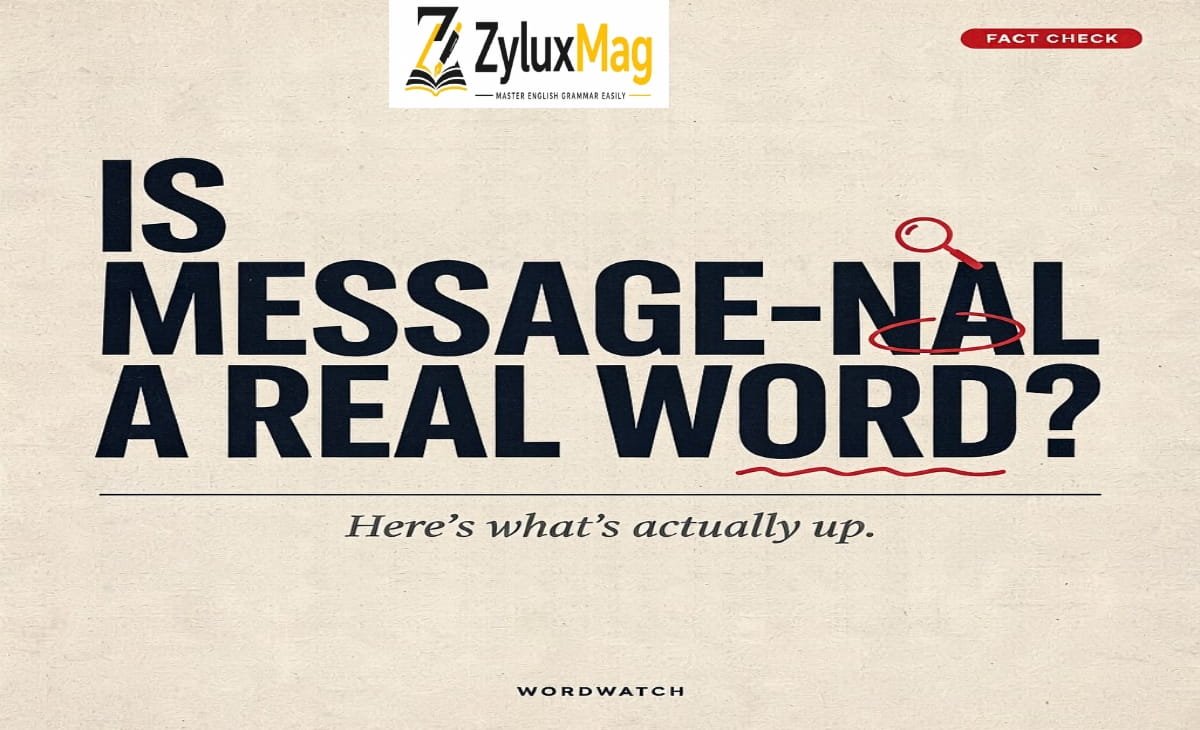
Messagenal isn’t in any dictionary. Merriam-Webster, Oxford, Collins, we’ve searched everywhere and it only turns up online in a few AI articles-and even they can’t seem to agree on what it means.
It appears in articles in a few places online-yet none of those places have consistent definitions. Even with real words, there are usually a few possible definitions. But the inconsistencies here are suspicious-the word looks made up, not found.
If you saw it at any point and wondered whether you missed out on something new to learn, here’s what you need to know:
Where “Messagenal” Really Comes From
Words like this tend to pop up when the content’s been written to rank for a search term with no or few competitors-because so few people are actually searching for real words with that meaning. A post gets written, a definition is made up that sounds plausible, and the post gets published. Search engines don’t know the difference, so the post can rank despite being 100% false.
That’s quite a different case from when a slang term or newer coinage gets picked up through actual usage (like “selfie” or “doomscrolling” once did). That’s how those words went viral, through people actually using them in conversation, not through a few people throwing around similar definitions in docs. “Messagenal” doesn’t do that; the few places that are using it have all been defining it differently, not in a standard way examples of made-up or unclear words online.
Why “Messagenal” Looks Like a Real Word (But Isn’t)
How the “-al” suffix actually works
English does form adjectives by adding -al to a noun: it turns “a thing” into “relating to that thing.”
| Noun | Adjective |
| nation | national |
| person | personal |
| season | seasonal |
| region | regional |
| culture | cultural |
This pattern is real and productive, but it isn’t unlimited. It works reliably on nouns that came into English from Latin (or via French from Latin), because “-al” is itself a Latin adjective-forming suffix. That’s why “national” and “regional” feel completely natural — their roots were already built to take it.
In college, I once built an entire marketing presentation slide around the phrase “audiencial engagement,” fully convinced it sounded sharp and academic. My professor stopped mid-lecture and just asked, “What does that mean?” I had no real answer — I’d assumed “-al” could attach to any noun and instantly sound smart. That was the moment it actually clicked: suffixes like “-al” follow real patterns, not vibes, and guessing at word formation in front of a room of people is a fast way to learn that the hard way.
The activity of sending messages/messaging
Example: The messagenal analysis indicated strong engagement.
The messaging analytics indicated strong engagement.
The message-related data indicated strong engagement.
How to Tell Fake Words From Real Words
Here’s a quick way to check a word like “messagenal” and anything else you’re not sure about:
Check two or three major dictionaries. If none of them have it, be skeptical.
Compare definitions across your sources. If the word is truly a word, every dictionary should have a consistent definition.
Where is it appearing? If it’s only in long-form articles with no edited dictionary backing, treat it skeptically.
Related Quick Confusion: “Message” and “Massage”
On the subject of message, a real confusion exists between a pair that can get mistyped by mistake. They’re very similar, but one means a note while the other one refers to a treatment:
I left her a message. (something said, a communication)
He booked a massage. (something to be physically treated)
This pair are real, dictionary-accepted versions of each other. That’s one worth verifying before you send it.
About the Author
Faizan Babar writes on English grammar, vocabulary, and everyday language mistakes for ZyluxMag. He focuses on cutting through confusing or misleading language content online and explaining the actual rules behind how English words are formed and used.