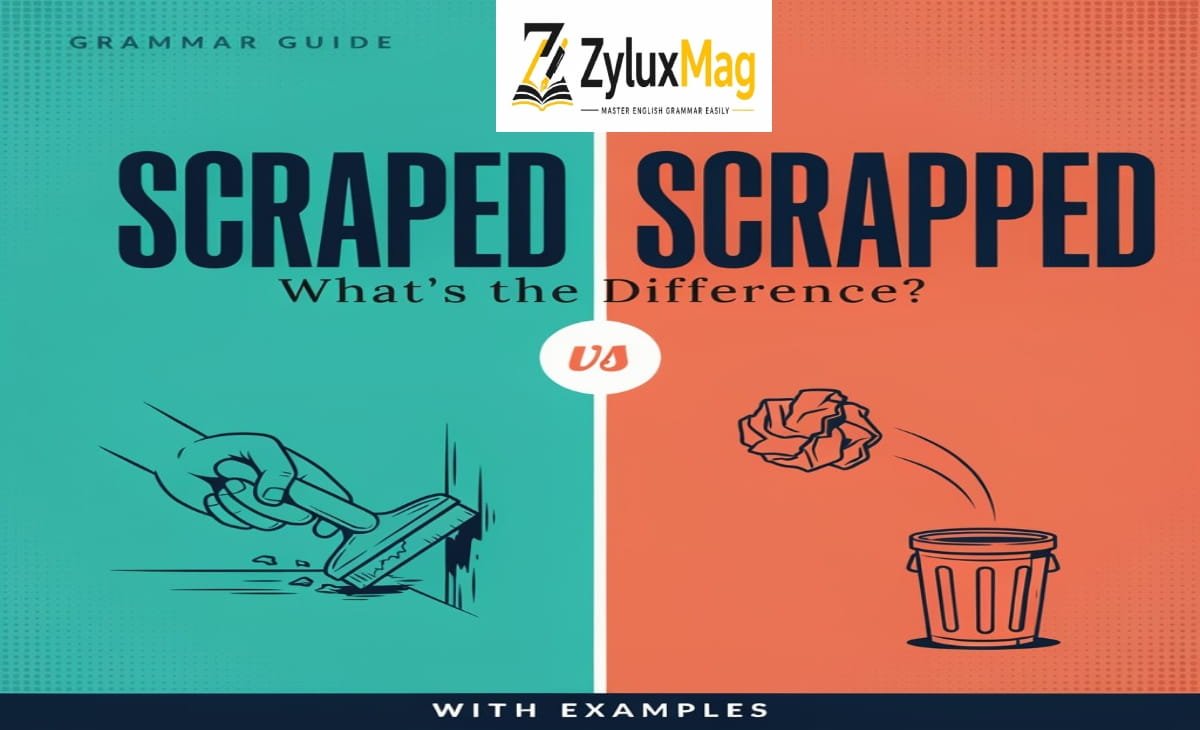
Scraped is the past tense of scrape — to rub, drag, or remove something by friction, or informally, to barely manage (“scrape by”). Scrapped is the past tense of scrap — to cancel, discard, or reduce something to junk. If something physically touched or rubbed a surface, use scraped. If something was cancelled or thrown away, use scrapped.
Why This Distinction Actually Matters
I once sent a client update saying we’d “scraped the homepage redesign” because the budget got cut. She replied within minutes asking why we were pulling data off her homepage. I stared at the email, confused, until it hit me — I’d meant scrapped, not scraped. One missing letter made it sound like we were secretly harvesting her website instead of cancelling a project. I fixed it, apologized, and laughed about it later, but I never made that mistake again. Now every time I type either word, I pause for half a second and picture that email — it’s saved me more than once taught vs thought common mistake.
What Does “Scraped” Mean?
Scraped comes from the verb scrape, which means to drag or rub something against a surface, often to remove a layer from it.
- She scraped her knee falling off the bike.
- He scraped the ice off the windshield before driving.
- I scraped the burnt bits off the toast.
Scrape also has an informal meaning: to manage something with difficulty, usually money or resources.
- We scraped together enough money for rent.
- They scraped by on a tiny budget last year.
Common Phrases with “Scraped”
- scrape by — to manage with just barely enough
- scrape together — to gather something (usually money) with effort
- scrape the bottom of the barrel — to use the last, least desirable option
- scraped knee/elbow — a minor injury from friction against a surface
What Does “Scrapped” Mean?
Scrapped comes from the verb scrap, which means to cancel, abandon, or get rid of something — often because it’s no longer useful or wanted.
- The company scrapped its merger plans.
- They scrapped the old car for parts.
- The meeting was scrapped at the last minute.
- Engineers scrapped the original design and started over.
Scrap is also a common noun meaning a small leftover piece, or waste material meant for recycling.
- There’s a scrap of paper on the desk.
- The metal was sold as scrap.
Common Phrases with “Scrapped”
- scrapped plans/project/idea — a plan that was cancelled before completion
- scrap heap — a pile of discarded material (also used figuratively: “sent to the scrap heap”)
- scrap metal — metal collected for recycling or reuse
Why Are “Scraped” and “Scrapped” Spelled So Differently?
This is the part most people never learn, and it’s the actual reason the two words look so similar but aren’t interchangeable.
English has a spelling rule for adding -ed or -ing to short verbs:
- If the verb ends in a single consonant after a short vowel sound, you double the final consonant.
→ scrap → scrapped, scrapping - If the verb ends in a silent “e”, you drop the e and add the ending — no doubling.
→ scrape → scraped → scraped, scraping → scraping
So scrap and scrape aren’t different spellings of the same word — they’re two completely different base verbs that happen to look alike once you add an ending. The doubled “p” in scrapped is simply a spelling rule, not a sign that the word is somehow “stronger” or more emphatic than scraped.
Scraped vs Scrapped at a Glance
| Scraped | Scrapped | |
| Base verb | scrape | scrap |
| Core meaning | rubbed, dragged, or removed by friction | cancelled, discarded, junked |
| Typical use | physical contact, minor injuries, informal “getting by” | plans, projects, vehicles, ideas |
| Example | She scraped her knee. | They scrapped the plan. |
| Related noun | scrape (a difficult situation) | scrap (a leftover piece or junk) |
Common Mistakes with Scraped and Scrapped
“Web Scraping” or “Web Scrapping”?
The correct term is web scraping — the process of automatically extracting data from websites. “Web scrapping” is a common misspelling, but it isn’t a real term. Think of it this way: a scraper scrapes data off a page the way you’d scrape frost off a window — it’s friction-based extraction, not cancellation.
- ✅ The tool is used for web scraping.
- ❌ The tool is used for web scrapping.
Scraped Knee, Not Scrapped Knee
An injury from friction is always scraped, never scrapped.
- ✅ He scraped his knee on the pavement.
- ❌ He scrapped his knee on the pavement.
Scrapped Plans, Not Scraped Plans
When something is cancelled, use scrapped — not scraped.
- ✅ The airline scrapped the flight due to weather.
- ❌ The airline scraped the flight due to weather.
Quick Test: Which Word Do You Need?
Ask yourself one question about what actually happened:
- Did something rub, drag, or get physically removed? → use scraped
(scraped paint, scraped knee, scraped by) - Was something cancelled, discarded, or junked? → use scrapped
(scrapped plans, scrapped car, scrapped project) - Talking about pulling data from a website? → it’s always web scraping, never “scrapping.”
If you can picture friction or contact, it’s scraped. If you can picture something being thrown out, it’s scrapped.
About the Author
Faizan Babar is a writer and content strategist at ZyluxMag, where he breaks down tricky English grammar and vocabulary into clear, practical guides for everyday writers. With hands-on experience in freelance content work and client communication, he writes from real-world mix-ups as much as from the rulebook — helping readers avoid the same mistakes he’s already made.