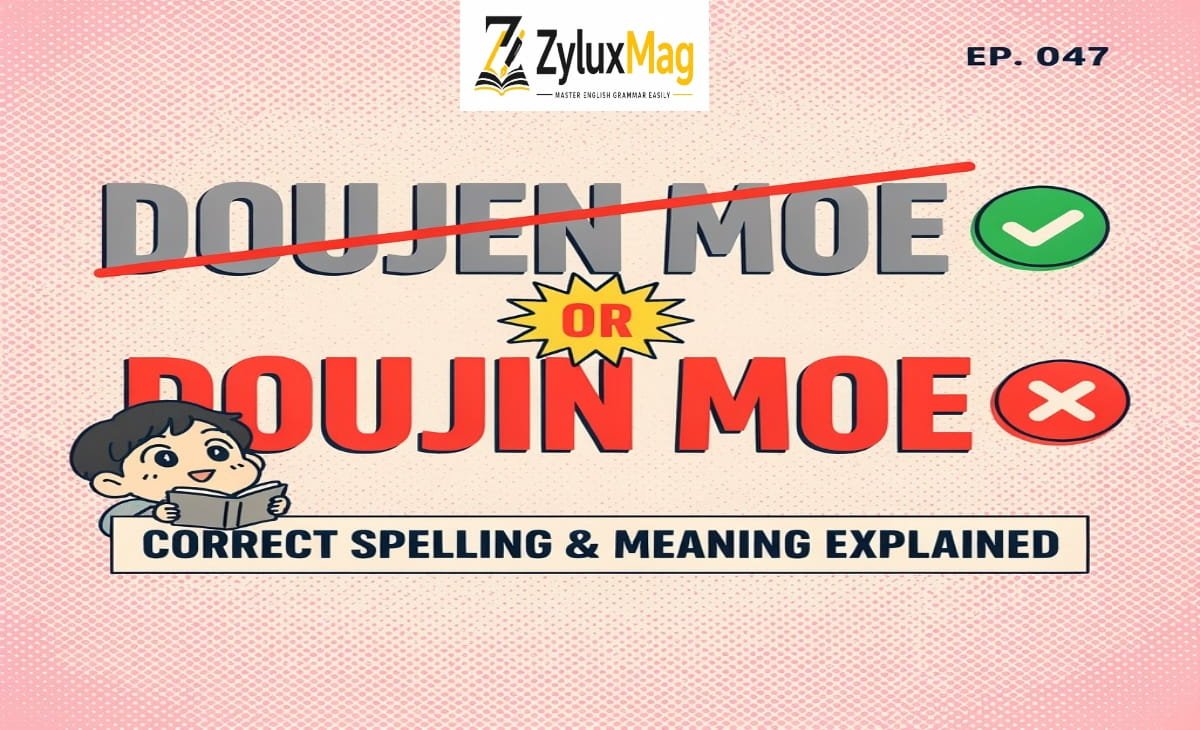
“Doujen Moe” is a misspelling. The correct form is Doujin Moe — a slang phrase from anime and manga fan culture that combines “doujin” (self-published fan works) and “moe” (a feeling of affection toward a character). “Doujen” is not a recognized spelling in either Japanese romanization or English usage — it’s simply a common typo.
In college, a friend of mine was presenting on fan culture for a media studies class and had “Doujen Moe” plastered across three slides of his deck. Nobody in the room corrected him — until the professor did, gently, mid-presentation. He turned red, we all laughed a little too hard afterward, and I remember thinking: one swapped vowel, and suddenly your whole slide looks unresearched. It’s stuck with me ever since as proof that small spelling details can undercut credibility fast, especially with loanwords nobody double-checks.
Breaking Down the Term: “Doujin” + “Moe”
“Doujin moe” isn’t one word — it’s two Japanese loanwords used together in English-language fan communities.
What “Doujin” Means
“Doujin” comes from the Japanese word 同人 (romanized as doujin). It refers to self-published, fan-made works — comics, art, novels, or games created independently rather than by an official publisher. A “doujinshi,” for example, is a self-published comic, often based on an existing anime or manga series.
What “Moe” Means
“Moe” comes from 萌え (also romanized as moe). It describes a feeling of affection or protectiveness toward a character, usually because the character seems cute, innocent, or emotionally endearing. It’s a feeling, not a physical trait — a character is described as having “moe,” not simply as “moe-looking.”
Put together, “doujin moe” describes fan-made works built around characters designed to trigger this kind of affection.
Why So Many People Spell It “Doujen”
The mistake comes from how the word sounds when spoken quickly or transliterated loosely. Japanese romanization uses “doujin,” with an i, not an e. Swapping the vowel to “doujen” is an easy slip — similar to how English speakers sometimes misspell other transliterated loanwords by guessing at the spelling from pronunciation rather than the original romanization.
There’s no version of the term where “doujen” is standard, alternate, or acceptable. If you see it written that way, treat it as a typo, not a variant spelling.
“Doujin Moe” vs. “Doujinmoe” — Not the Same Thing
This is where a second mistake often creeps in, even among people who already know how to spell “doujin” correctly.
- Doujin moe (two words) is a general slang phrase describing a style or feeling in fan-made anime/manga content.
- Doujinmoe (one word, capitalized as a name) refers to a specific website that hosts and distributes doujinshi and other fan-made works.
In other words, one is a descriptive phrase, and the other is a proper noun — the name of a platform. You can use “doujin moe” to describe a general style without ever referring to the site, and you can mention the site “Doujinmoe” without using the phrase descriptively. Mixing the two up in writing can make a sentence confusing, since one is a common phrase and the other is a brand name.
Example (descriptive phrase):
The artist’s new comic has a strong doujin moe style, with soft art and an emotionally close cast of characters is this even a real word.
Example (platform name):
She uploaded her doujinshi to Doujinmoe so other fans could read it.
How to Pronounce “Doujin Moe”
- Doujin: DOH-jin (rhymes with “no” + “gin”)
- Moe: MOH-eh (two syllables, not one — not like the name “Moe”)
Said together, it’s roughly: DOH-jin MOH-eh.
At a Glance
| Correct spelling | Doujin Moe |
| Common misspelling | Doujen Moe |
| Origin | Japanese: 同人 (doujin) + 萌え (moe) |
| Meaning | Fan-made, self-published works featuring characters designed to evoke affection |
| Not to be confused with | Doujinmoe — a specific fan-content platform |
| Pronunciation | DOH-jin MOH-eh |
About the Author
Faizan Babar is a writer and editor at ZyluxMag, focusing on English grammar, word usage, and the small language mix-ups that trip up even careful writers. He enjoys untangling confusing terms — especially the loanwords and slang that spread online faster than anyone can agree on how to spell them.