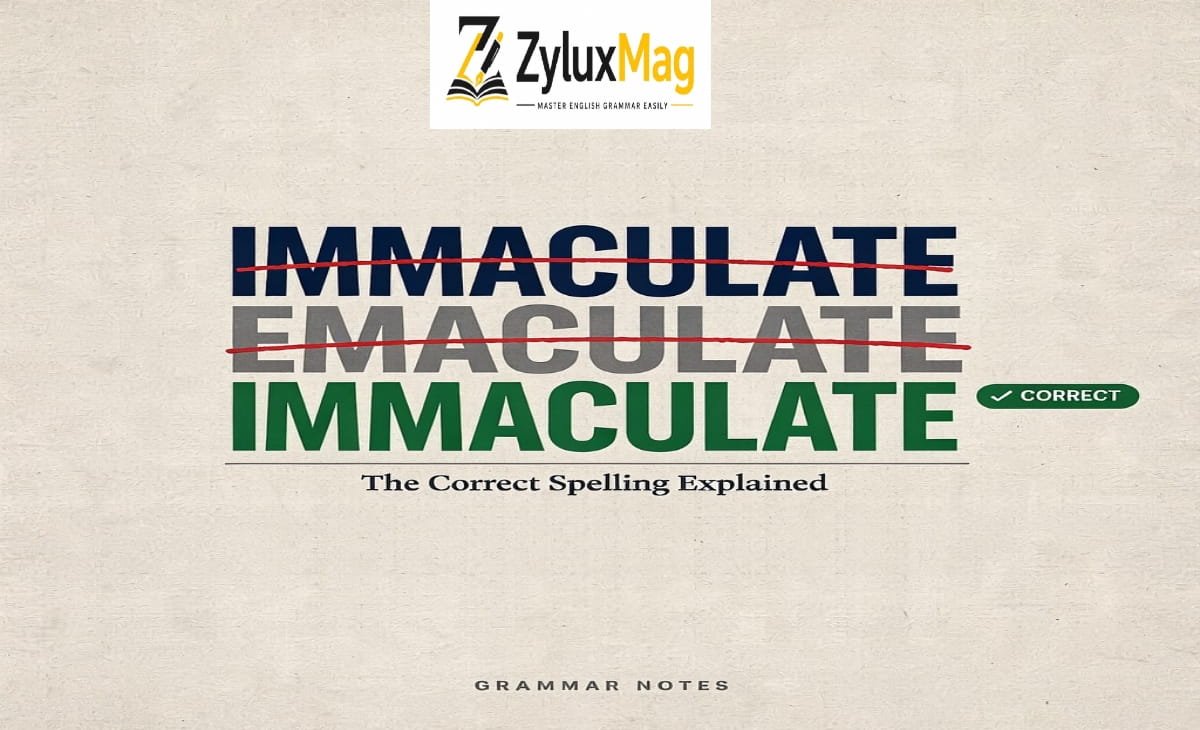
Immaculate or Emaculate is the correct spelling. “Emaculate” is a common misspelling and doesn’t appear in any standard English dictionary. The mistake usually happens because the double “m” at the start of “immaculate” gets lost when people sound the word out or type it quickly.
I learned this the hard way. A few years ago, I sent a client email describing our newly renovated office as “completely emaculate” — I was genuinely proud of how it turned out. Ten minutes later, a coworker messaged me: “Did you mean to say the office emasculated something?” My stomach dropped. Autocorrect had quietly swapped my typo into a completely different word, and I hadn’t even glanced back before hitting send. The client never brought it up, thankfully, but I triple-check that word now every single time. That one email taught me more about double letters than any grammar class ever did.
If you’ve ever typed “emaculate” and had your phone or word processor change it to something else entirely, you’re not alone — and that autocorrect swap is worth understanding, because it can cause a genuinely awkward mistake.
Why “Immaculate or Emaculate” Feels Right But Isn’t
“Immaculate” starts with a double “m” — im-maculate. When people say the word aloud, the two “m” sounds blend into one, so it’s easy to hear only a single “m” and write “emaculate” instead. The “i” also sometimes shifts toward an “e” sound in casual speech, which reinforces the wrong spelling.
But “emaculate” isn’t a recognized word in English. It has no dictionary entry, no accepted meaning, and no legitimate use — it’s simply a misspelling of “immaculate.”
The Autocorrect Trap: How “Emaculate” Becomes “Emasculate”
Here’s the part most explanations miss: if you type “emaculate” (or a near-miss like “emmaculate”), many spellcheckers and autocorrect tools don’t recognize it — and instead of suggesting “immaculate,” they sometimes suggest or auto-change it to “emasculate.”
That’s a real word, but it means something completely different: to deprive of strength, power, or a sense of masculinity. For example: “Budget cuts emasculated the department’s ability to function.”
So a sentence meant to say “the office was spotless” can accidentally turn into something that sounds bizarre or even offensive — a real risk in emails, resumes, or published writing where you might not proofread every autocorrect change. If you’re ever unsure, it’s worth double-checking any sentence with “emaculate” in it before you send or publish it.
What “Immaculate” Actually Means
“Immaculate” is an adjective with two main uses:
- Spotlessly clean or pure — no dirt, marks, or stains.
“The hotel room was immaculate, with fresh linens and not a speck of dust.” - Flawless or free of mistakes — used for performance, records, or reasoning.
“She gave an immaculate performance, without a single wrong note.”
There’s also a more specific religious sense, most familiar from the phrase “Immaculate Conception,” referring to freedom from sin. But in everyday English, the word is used far more often in its ordinary, secular sense — describing clean spaces, tidy appearances, or error-free work common spelling mistakes like naive or nieve.
Where the Word Comes From
“Immaculate” comes from the Latin immaculatus, built from in- (“not”) and maculatus (“spotted” or “stained”). Literally, it means “not stained.” That’s a useful thing to remember: no stain, no mistake — and no missing letters. If you picture the word as “not marked” in any way, including in its own spelling, the double “m” is easier to recall.
How to Use “Immaculate” Correctly in a Sentence
“Immaculate” usually appears after verbs like be, look, seem, or keep, and it’s often used to describe rooms, clothing, records, or performances:
- “He kept his car immaculate, inside and out.”
- “The report was immaculate — no typos, no errors, nothing to fix.”
- “Her uniform looked immaculate for the inspection.”
- “The company has an immaculate safety record.”
Don’t Say “Very Immaculate”
“Immaculate” is what’s called an absolute adjective — it already describes a complete state (completely clean, completely flawless), so it can’t logically be made “more” or “less” true. That means you should avoid intensifiers like very, quite, or extremely before it.
- “The kitchen was very immaculate.”
- “The kitchen was immaculate.”
If you want to soften or intensify the idea, change the word instead — “almost immaculate” or “practically immaculate” both work, because they acknowledge it’s close to that absolute standard rather than pretending the standard has degrees.
Quick Recap
| Immaculate | Emaculate | Emasculate | |
| Real word? | Yes | No | Yes (unrelated meaning) |
| Meaning | Spotlessly clean; flawless | — (misspelling) | To weaken or strip of power |
| Safe to use? | Yes | Never | Only if you mean this specific word |
The rule to remember: two m’s, no stains, no mistakes. “Immaculate” is the only correct form — and if autocorrect ever tries to hand you “emasculate” instead, that’s your signal something went wrong.
About the Author
Faizan Babar is the founder and lead writer at ZyluxMag, where he writes about English grammar, vocabulary, and the everyday word mix-ups that trip up even confident writers. Drawing on years of hands-on writing and editing experience, he breaks down tricky spelling and grammar rules into simple, practical lessons — often learned the hard way, one typo at a time.