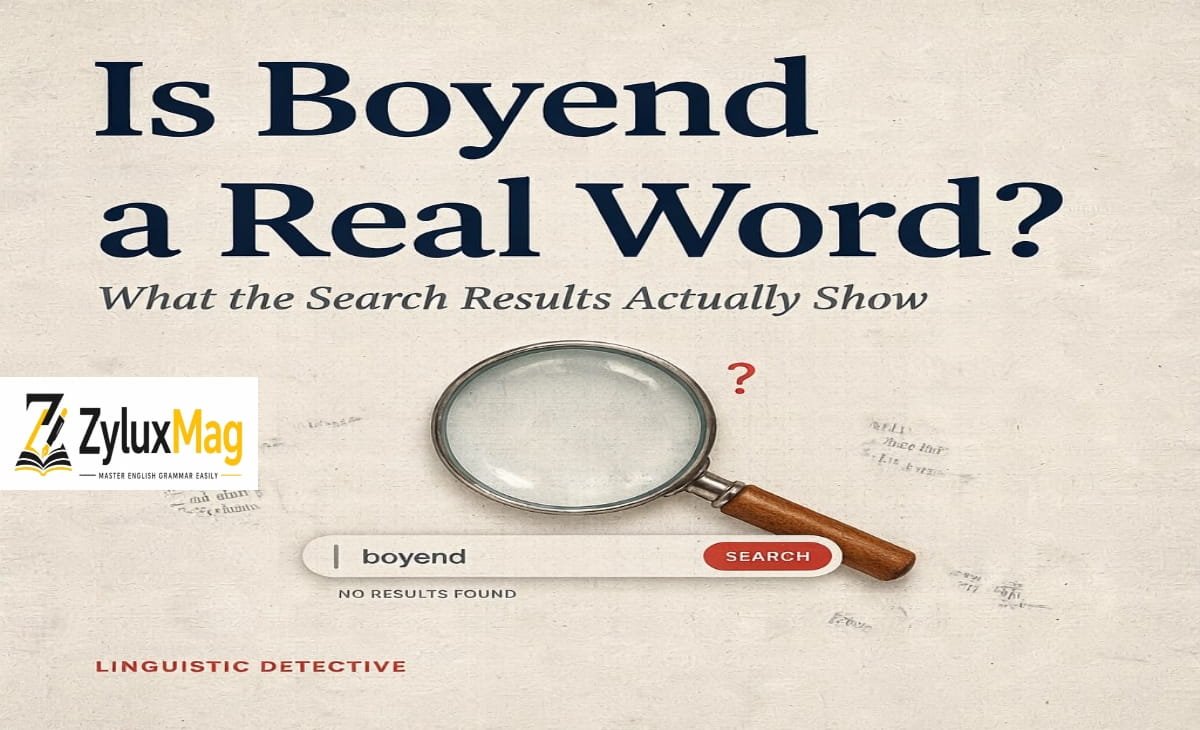
No — boyend is not a recognized English word. It has no dictionary entry and no organic usage on social media. The only content using it is a single AI-generated article describing a fake “trend,” copy-pasted with identical wording across several unrelated, low-quality websites.
If you searched for this term because you saw it described somewhere as a fashion movement or a Gen Z identity trend, you’re not missing something obvious — that content simply isn’t accurate.
A few years back, I was writing content for a client’s blog and stumbled on a “trending slang” list that included a word I’d never heard anyone actually say. It sounded believable enough that I almost wrote a whole paragraph explaining it. Something felt off though, so I searched for the word on its own — turns out it only existed on three near-identical “definition” sites, all copying the same sentence. I pulled it from the draft an hour before it went live. Ever since, I don’t trust a word just because five websites agree on it. I check if anyone’s actually using it first.
Where “Boyend” Actually Comes From
The word doesn’t appear in any major English dictionary, and there’s no sign of people actually using it in conversation, on TikTok, on Reddit, or anywhere else real language develops.
What does exist is a short block of text — always the same wording, almost sentence for sentence — describing “boyend” as a movement blending masculinity, self-expression, and streetwear fashion. That exact paragraph shows up on multiple unrelated websites with no connection to each other. That pattern is a strong sign of AI-generated filler content: text written once, then published (or scraped and republished) across many low-effort sites to attract search traffic for a word people are curious about.
In short: the word wasn’t coined by a community and picked up naturally. It was written into existence by content designed to rank in search results, not to describe anything real.
How to Tell If a “Trend Word” Is Real
The internet invents a lot of slang, and some of it genuinely catches on. Here’s a simple checklist for telling the difference between a real term and manufactured content:
- Can you find an original source? Real slang usually traces back to a specific post, creator, or community moment.
- Does it show up outside of definition sites? Actual usage means real people using the word in real posts, comments, or conversation — not just articles explaining what it supposedly means.
- Do independent sources agree, or just repeat each other? If five websites all use the exact same sentences, that’s copying, not confirmation.
- Is it covered by an established source? Real slang tends to eventually get picked up by dictionaries, journalism, or slang-tracking sites like Know Your Meme, often with a documented timeline.
- Does the definition stay consistent, or does it feel vague and shifting? Manufactured “trend” content often hedges with phrases like “its exact definition shifts across contexts” — a sign the writer doesn’t have anything concrete to describe.
If a term fails most of these checks, treat the definition you found with skepticism words that don’t actually exist in English.
What Real Slang Coinage Looks Like
For comparison, here’s how a genuine slang term differs from something like “boyend”:
| Real slang (e.g., “boy dinner”) | “Boyend”-type content | |
| Origin | Traceable to a specific creator and date | No identifiable origin |
| Independent coverage | Picked up by multiple unrelated, credible sources | Only appears in copy-pasted filler articles |
| Organic usage | Used by real people in posts and conversation | No usage found outside definition pages |
| Consistency | Meaning stays stable across sources | Definition is vague and repeats the same scripted phrasing |
“Boy dinner,” for example, started with a specific TikTok creator in July 2023, spread because other people genuinely used and adapted the term, and was later documented by independent slang-tracking sites. That’s what real word formation looks like — it leaves a trail.
Did You Mean Something Else?
If you came across “boyend” expecting it to relate to something specific, here are a few possibilities:
- A typo or misspelling — if you encountered it in a specific sentence or context, it’s worth double-checking the spelling.
- A name — “Boyden” is an existing English surname and given name, unrelated to “boyend.”
- A one-off content-farm invention with no real meaning at all, which is the most likely explanation based on everything above.
If none of these fit what you were looking for, the honest answer stands: “boyend” isn’t an established English word, and any article confidently defining it as a cultural trend is describing something that doesn’t exist.
About the Author
Faizan Babar is the owner and main writer at ZyluxMag, where he covers English grammar, vocabulary, and word usage with a focus on clear, accurate, people-first content. He writes from hands-on experience creating web content professionally, and has learned firsthand — sometimes the hard way — how easily unreliable “definitions” can spread online.